The breakfast egg is on the blacklist, as is butter, and in the end, one buys expensive margarine labeled “lowers cholesterol.” When someone first thinks about food after finding elevated LDL in the lab, they quickly land on such rules. Many of these are outdated. What nutrition actually does for cholesterol, where its limits lie, and which changes are worthwhile, you can read here.
The Egg is Not the Problem
For a long time, it was believed that to lower cholesterol in the blood, one must avoid cholesterol in food. It’s not that simple. The body produces most of its cholesterol itself, primarily in the liver. What comes in through food usually has only a small impact on LDL levels, and it varies from person to person.
The type of fat has a much stronger effect. Saturated fatty acids, found in butter, cream, sausage, fatty meat, and palm oil, hinder the uptake of LDL in the liver and cause the levels to rise. Industrially hardened fats with trans fatty acids do the same. Therefore, European guidelines recommend limiting saturated fat to less than 10 percent of daily energy intake and avoiding trans fats as much as possible.
Substituting Instead of Giving Up
The gain does not come from eliminating something. It comes from what replaces it. If you spread butter on your bread and only have white bread with jam for breakfast instead, you save fat but gain little for your heart and vessels. Replacing saturated fats with unsaturated ones, on the other hand, measurably lowers LDL.
- Canola oil or olive oil instead of butter for frying and salads
- A handful of unsalted nuts (about 30 grams) instead of chips or cookies
- Fish once or twice a week instead of sausage sandwiches; the fat from salmon or mackerel is also a plus
- Legumes as a meat substitute: lentils, chickpeas, beans
- Whole grain bread instead of white bread toast
Red and processed meat do not have to be completely eliminated from the plate. However, they should be the exception, not the norm.
Fiber: The Underestimated Lever
Soluble fibers bind bile acids in the intestine, which the body produces from cholesterol. The liver then has to pull more cholesterol from the blood to produce more. LDL decreases. Oats, barley, legumes, apples, berries, and flaxseeds are particularly rich in this.
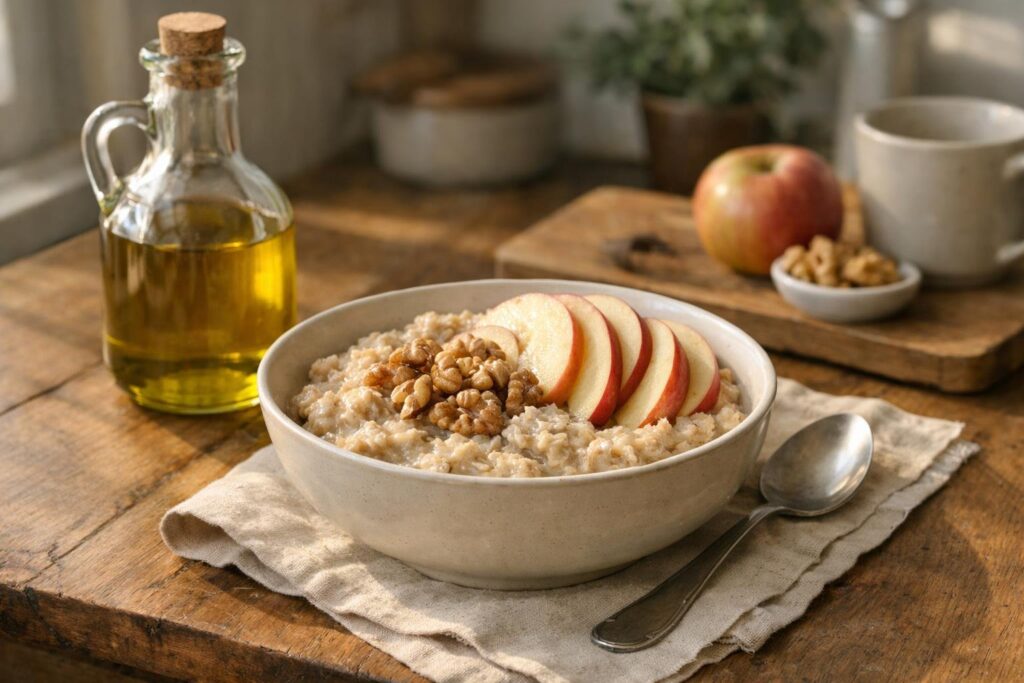
The guidelines recommend 25 to 40 grams of fiber per day, of which some should be soluble. Most people in Germany fall short of this. A bowl of oatmeal with apple in the morning and a serving of lentils at lunch will already get you a good way closer.
And the Cholesterol Margarine?
Plant sterols are substances that chemically resemble cholesterol and compete with it for absorption in the intestine. Margarines, yogurt drinks, and similar products enriched with sterols can moderately lower LDL, provided they are consumed regularly and in sufficient amounts. They are not a miracle cure.
Two limitations apply. There is no evidence that they prevent heart attacks. And they are not intended for children, pregnant women, or nursing mothers. If you want to use them, it’s best to briefly discuss it in practice.
Weight, Alcohol, Exercise
Food is only part of the equation. Losing weight usually also lowers triglycerides and often slightly reduces LDL while raising protective HDL. Exercise has the same effect. The WHO recommends that adults engage in at least 150 to 300 minutes of moderate activity per week, such as brisk walking or cycling, spread over several days.
Alcohol primarily raises triglycerides. The European guidelines set an upper limit of 100 grams of pure alcohol per week; less is better. Those who already have elevated triglycerides often benefit significantly from reducing alcohol intake.
An example from everyday life: If you are used to having chips and wine in front of the TV in the evening, you don’t have to completely overhaul your life. One step, such as choosing nuts instead of chips, is better than a plan that fails after two weeks.
How Much Can Food Achieve?
Here, honesty helps. For many people with moderately elevated LDL, a consistent change can bring a noticeable effect. However, for those at high overall risk, after a heart attack, or with a hereditary lipid metabolism disorder, diet alone is usually not sufficient (more on this in Recognizing Familial Hypercholesterolemia). In such cases, medication may also be necessary. Which one is determined by the doctor. Do not stop prescribed medications on your own, even if you are now eating healthier.
Whether you reach your goal can be shown through monitoring. LDL can be measured again one to three months after the change. How the value is composed and which target fits your risk is detailed in Understanding Cholesterol Values.
When You Should See a Doctor Immediately
Elevated cholesterol does not have noticeable symptoms. Warning signs are the consequences on the vessels. Call 112 if you experience:
- Pressure, tightness, or pain in the chest that does not go away or radiates to the arm, jaw, or back
- Sudden paralysis, drooping mouth corner, or speech disturbance
- Severe shortness of breath or fainting
You should see a doctor promptly if you feel chest tightness during exertion or if your legs hurt while walking and ease again at rest.
Frequently Asked Questions
Can I eat eggs?
Yes, in moderation. For most people, eggs play a minor role in LDL; what else is on the plate, such as bacon, sausage, or butter, is more important. If you have a known lipid metabolism disorder, it’s better to clarify the amount with your doctor.
How quickly does a dietary change take effect?
Initial changes often appear after a few weeks. A reliable assessment can be made after about three months when you have your LDL measured again.
Does fasting or a strict diet help?
Short radical diets rarely produce lasting effects. What matters is a diet that you can maintain in the long term, such as one modeled after the Mediterranean diet with plenty of vegetables, legumes, olive oil, and fish.
Do dietary supplements lower cholesterol?
For most supplements, the effect is not sufficiently proven. Fiber-rich foods are more reliable. Discuss any long-term use with your doctor, especially if you are taking medications.
Also Read
- Understanding Cholesterol Values: What LDL, HDL, and Triglycerides Indicate
- Familial Hypercholesterolemia: When High Cholesterol Runs in the Family
- Nutrition in Prediabetes: What Goes on the Plate
- Lowering Blood Pressure in Daily Life: Salt, Exercise, and Weight
This article is for informational purposes only and does not replace medical advice.
Sources
- Mach F. et al.: 2019 ESC/EAS Guidelines for the management of dyslipidaemias: lipid modification to reduce cardiovascular risk, Eur Heart J 2020;41:111–188.
- Visseren F. L. J. et al.: 2021 ESC Guidelines on cardiovascular disease prevention in clinical practice, Eur Heart J 2021;42:3227–3337.
- WHO guidelines on physical activity and sedentary behaviour, Geneva 2020.
- Familial Hypercholesterolemia: When High Cholesterol Runs in the Family
- Understanding Cholesterol Values: What LDL, HDL, and Triglycerides Indicate