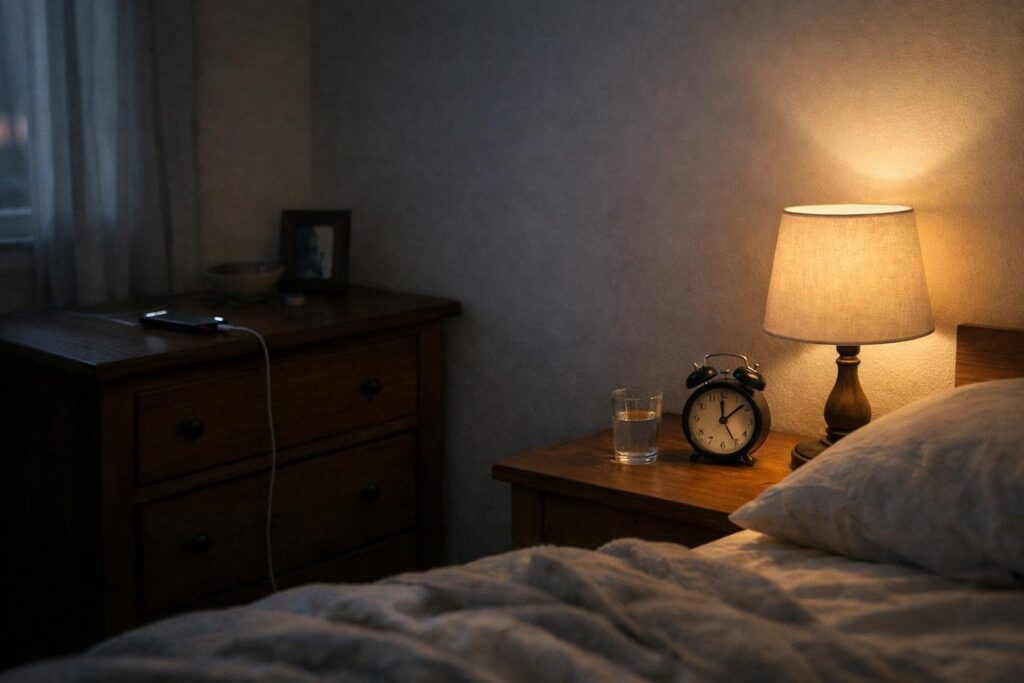
It’s just after eleven, the lights are out, and the mind is racing: today’s email, tomorrow’s appointment, the question of what time it actually is. When lying like this, many often reach for their phone, “just for a moment.” This usually extends the time spent awake. This text shows which habits facilitate falling asleep, which ones hardly help, and when it’s worth seeking medical advice.
Why Sleep Hygiene is More Than Just “Going to Bed Early”
Sleep hygiene refers to the habits and conditions surrounding the night: light, timings, caffeine, bed, evening routine. It does not replace treatment if someone has been sleeping poorly for months. But it forms the foundation upon which everything else is built.
The body operates with an internal clock. It primarily responds to light and fixed timings. When both get disrupted, for example, by long evenings in front of screens and sleeping in on weekends, the clock lags behind daily life. Many know this feeling on Sunday evenings: tired all day, wide awake as soon as it’s time for bed.
Fixed Timings: The Underestimated Lever
The most effective rule sounds boring. Get up at a similar time every day, even on weekends. The wake-up time shapes the rhythm more than the time you go to bed.
- Only go to bed when you are truly tired, not just because “it’s time.”
- Don’t compensate for a short night by sleeping in. This pushes the next night back.
- If you take a nap, it should be in the early afternoon and kept short.
Light, Screens, and Late Evenings
Bright light in the morning and during the day sets the internal clock. In the evening, the opposite applies: dim light signals to the body that night is approaching. A walk after breakfast is therefore an easy start.
When it comes to phones in bed, it’s not just about the light from the screen. The content is equally important. Messages, social networks, and emails keep the brain on high alert. Put the device away an hour before sleeping and charge it out of reach. If you need an alarm, consider using a classic one.
Caffeine, Alcohol, Late Meals
Caffeine is not only found in coffee but also in black tea, cola, energy drinks, and chocolate. It is broken down slowly. If you have trouble falling asleep at night, try avoiding it from early afternoon and observe what changes.
While alcohol may make you sleepy, it disrupts sleep in the second half of the night. You fall asleep faster but wake up earlier. A heavy meal right before bed also burdens the body. A small snack is fine if you would otherwise lie awake hungry.
Smoking in the evening is also stimulating, as nicotine is a stimulant.
The Bedroom: Bed Only for Sleeping
The brain learns associations. If you ponder, work, eat, or watch TV in bed, you eventually associate the bed with being awake. The antidote is stimulus control, a component of cognitive behavioral therapy for sleep disorders: bed for sleep and intimacy, nothing else.
- Cool, dark, and quiet is ideal for most people. A rule of thumb is around 16 to 18 degrees Celsius, although individual preferences vary.
- Keep the clock out of sight. If you constantly check the time at night, you keep yourself awake.
- If you lie awake for more than about 20 minutes, get up, go to another room, and do something quiet in low light. Return to bed only when you feel tired.
Evening Ruminations: A Note Helps
Many people can’t switch off because the day lingers on. A simple trick: write down in the early evening what needs to be done and what’s on your mind. Once it’s written down, it’s no longer in your head. This doesn’t replace a conversation if worries are larger, but it often alleviates pressure during the night.
Relaxation helps when practiced regularly. This includes progressive muscle relaxation, calm breathing, or autogenic training. Trying it once and discarding it again yields little; the effects build up over weeks.
When to Seek Medical Advice
Bad nights are part of it. A sleep disorder in the medical sense occurs when problems falling or staying asleep happen at least three times a week over several weeks and have daytime consequences, such as exhaustion, concentration issues, or a depressed mood.
- Loud, irregular snoring with breathing pauses, observed by someone else, or morning headaches and pronounced daytime sleepiness: This may indicate sleep apnea.
- Tingling or the urge to move the legs, especially in the evening while at rest.
- Persistently low mood, anxiety, or thoughts of not wanting to live anymore. You should seek medical or psychotherapeutic help promptly.
- Problems falling asleep after starting a new medication: Talk to your doctor, and do not stop anything on your own.
For long-lasting insomnia, cognitive behavioral therapy for insomnia is considered the first choice. It is prioritized in guidelines over sleeping pills. Whether and which medications may be appropriate is determined by your doctor.
Frequently Asked Questions
How long does it take for new sleep habits to take effect?
It usually takes a few weeks. The first few days may even be more restless, especially if you stick to the wake-up time consistently. Keep a sleep diary, and you’ll see changes more clearly than by feeling.
Do sleep apps and trackers help?
Relaxation exercises from apps can be useful. Trackers, on the other hand, only provide estimates, and looking at poor numbers can sometimes create additional pressure. If you feel more stressed than informed after waking up, leave the device aside.
Is a glass of wine in the evening really that bad?
Occasionally, it’s not a drama. However, if you regularly drink in the evening to fall asleep, you should discuss this openly with your family doctor.
Also Read
- Sleep Medicine: Sleep Disorders and Ways to Restful Sleep
- Tension Headaches in the Office: Neck, Screen, Breaks
This article is for informational purposes only and does not replace medical advice.
Sources
- Riemann D. et al.: S3 Guidelines on Non-Restorative Sleep/Sleep Disorders, Chapter “Insomnia in Adults,” Somnologie 2017;21:2–44 (DGSM).
- Qaseem A. et al.: Management of Chronic Insomnia Disorder in Adults: A Clinical Practice Guideline From the American College of Physicians, Ann Intern Med 2016;165(2):125–133.