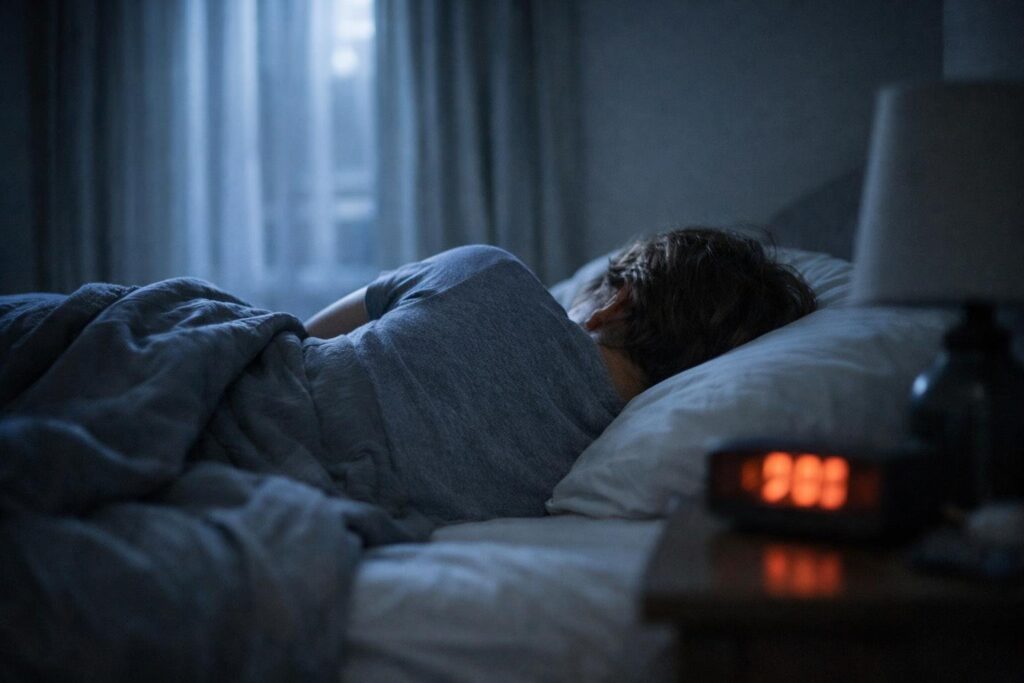
It’s three o’clock, and you suddenly wake up. The clock shows: four more hours. Your mind starts calculating how much sleep is left, and this very calculation keeps you awake. Almost everyone knows nights like this. This article is for those who experience them frequently and want to know what might be causing it.
Short Awakenings are Normal
Sleep occurs in cycles, and between these cycles, the body briefly approaches wakefulness. Most of the time, we don’t notice it. As we age, we wake up more often and become more easily disturbed; sleep becomes lighter. Waking up briefly one to two times a night is therefore not a sign of illness.
It becomes a problem when you can’t fall back asleep for a long time afterward, suffer noticeably during the day, and this persists for weeks. Experts refer to this as a sleep disturbance, a form of insomnia.
What Can Pull You Out of Sleep at Night
There is rarely a single cause. Often, several factors work together.
- Alcohol in the Evening. It initially makes you sleepy but disrupts the second half of the night. Many people wake up after a few hours and find it hard to return to sleep.
- Caffeine and Late Meals. Caffeine can affect some people for many hours afterward. A heavy meal shortly before bedtime can promote heartburn and restless sleep.
- Worries and Tension. Those who don’t have time to think during the day will find it at night.
- Environment. Too warm, streetlight, a partner who snores.
- Bathroom Trips. If you need to go multiple times a night, you should have it checked by a doctor. Sometimes there’s something else behind it, like sleep apnea.
- Medications. Some medications can affect sleep. Don’t stop taking anything on your own; talk to your doctor.
When the Body is to Blame: Breathing Pauses, Pain, Hormones
Not everything is in your head. If you wake up with a dry mouth and headache and feel very tired during the day, consider nighttime breathing pauses. More about this can be found in the article Sleep Apnea: Signs You Should Take Seriously.
Pain, reflux, asthma, or heart issues can also fragment sleep. During menopause, many women are disturbed at night by hot flashes. An overactive thyroid can cause inner restlessness and sweating. If waking up continues, it’s worth visiting your general practitioner before struggling alone with sleep rules.
Why Checking the Clock Extends the Night
Here lies a core of the problem. If you wake up at three o’clock, you look at the clock, calculate, and get frustrated. The frustration releases stress hormones, making the body more alert. Gradually, the bed becomes associated with worrying instead of sleeping.
What often helps against this is unremarkable:
- Turn the alarm clock so you can’t see the face at night.
- Don’t insist on sleep. Lying down and breathing calmly relaxes you even if sleep doesn’t come immediately.
- If you get frustrated after a while, get up. Dim light, a quiet book, or music, no phone. Only return to bed when you feel tired.
- Write down your thoughts. A note next to the bed takes the worry of forgetting something off your mind.
The rules behind this are described in the article Sleep Hygiene: Rules for Better Sleep. They also apply to sleeping through the night.
Wide Awake at Four: A Pattern of Its Own
If you regularly wake up very early and can’t fall back asleep, you should pay attention. Waking up early with a low mood, lack of motivation, or loss of joy can be a sign of depression. This is not a reason for panic but a reason to talk to a doctor about it.
When Sleep Medications are a Topic and When They Are Not
Over-the-counter and prescription sleep medications are not considered the first choice for long-term use according to guidelines. They can be addictive, and their effectiveness diminishes. Whether a medication is sensible for a limited time is determined by the doctor. Professional societies recommend cognitive behavioral therapy first for persistent insomnia. How it works is explained in the article Insomnia: How Cognitive Behavioral Therapy Helps with Sleep.
When You Should See a Doctor
- The sleep problems persist for more than a few weeks, several times a week, and you feel exhausted during the day or have trouble concentrating.
- There are breathing pauses, loud snoring, or falling asleep at the wheel. Don’t drive if you feel drowsy.
- You wake up with chest pain, shortness of breath, or a racing heart. If you have chest pain with shortness of breath, call emergency services at 112.
- Low mood, hopelessness, or thoughts of self-harm. Speak to a doctor promptly. If you have acute suicidal thoughts, call emergency services at 112.
Frequently Asked Questions
Is it bad if I wake up once every night?
Not necessarily. What matters is how long you lie awake and how you feel during the day. If you fall back asleep quickly and feel fit, there is usually no need for action.
Does a nap help if the night was short?
A short nap in the early afternoon can be relieving. Longer naps or late afternoon naps can reduce sleep pressure in the evening and may further disturb the night.
Should I eat or drink something if I can’t sleep?
Better not. Meals at night train the body to be awake. A sip of water is fine.
Read Also
- Sleep Hygiene: Rules for Better Sleep
- Insomnia: How Cognitive Behavioral Therapy Helps with Sleep
- Sleep Apnea: Signs You Should Take Seriously
This article is for informational purposes only and does not replace medical advice.
Sources
- Riemann D. et al.: S3 Guidelines on Non-Restorative Sleep/Sleep Disorders, Chapter “Insomnia in Adults”, Somnologie 2017;21:2–44.
- Qaseem A. et al. (American College of Physicians): Management of Chronic Insomnia Disorder in Adults, Ann Intern Med 2016;165(2):125–133.