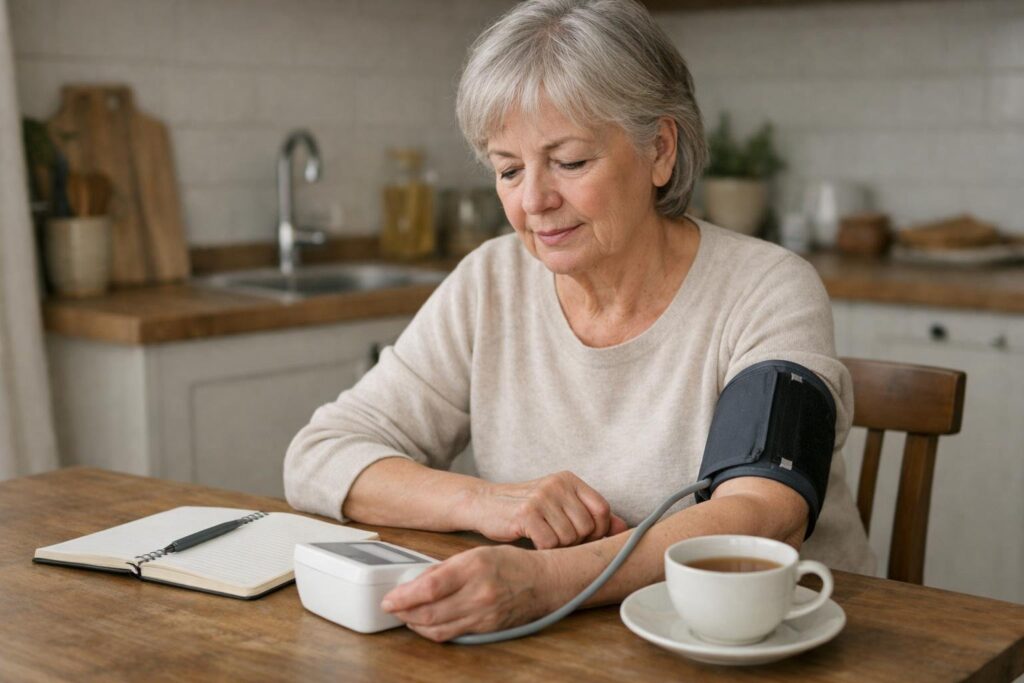
The measuring device shows 152/94, and you don’t know if this is a case for emergency services, for tomorrow morning, or for the next routine check-up. The answer depends on two things: how high the value is and how you feel. Here’s how to assess both.
A Single High Value Is Not a Diagnosis
Blood pressure fluctuates throughout the day. Excitement, climbing stairs, coffee, a full bladder, or pain can raise it. Therefore, a single outlier means little. European guidelines only establish a diagnosis when the value remains elevated in repeated measurements, usually at more than one appointment.
In practice, the threshold is considered to be 140/90 mmHg. When measuring at home, it is lower, at 135/85 mmHg. How to achieve this is explained in Measuring Blood Pressure Correctly at Home, and what the two numbers mean is covered in Understanding Blood Pressure Values.
Act Immediately: Emergency Call 112
In cases of very high values, it’s not just the number that matters, but also the accompanying signs. Call emergency services at 112 if a significantly elevated value occurs along with any of these signs:
- Pressure, tightness, or pain in the chest, even if it radiates to the arm, jaw, or back
- Shortness of breath at rest
- Sudden weakness or numbness on one side of the body, drooping mouth corner
- Sudden speech or vision disturbances, confusion
- A headache like you’ve never had before
- Seizure or altered consciousness
Do not wait to see if it gets better on its own. And do not drive yourself.
Very High, But No Symptoms
This scenario is more common and unsettles many. The values are around 180/110 mmHg or higher, yet you feel normal. The guidelines differentiate here: without signs of acute organ damage, it is not an emergency, but also not something to postpone.
Calmly sit down, wait a few minutes, and measure again, on the other arm with the appropriate cuff. If the value remains high, call your general practitioner on the same day or contact the medical on-call service at 116 117. Take prescribed tablets as directed. Taking additional tablets on your own is not a good idea, as a rapid drop can cause symptoms and harm.
Timely Appointment: Values That Persist
For most people, daily life looks different. The values are not at 190 but rather between 145 to 160 over 90 to 100, and this occurs over several days. This is not a reason to rush, but a reason to make an appointment. It is sufficient if it is scheduled within the next one to two weeks.
Go even if you feel fine. High blood pressure usually doesn’t hurt. It silently damages blood vessels, heart, kidneys, and eyes over the years, which is why it often only becomes apparent during a check-up.
When the Doctor’s Appointment Should Be Sooner
A prompt appointment is advisable if there are additional factors along with elevated blood pressure:
- You are pregnant. High blood pressure during pregnancy always requires medical attention, especially with headaches, vision disturbances, upper abdominal pain, or suddenly swollen hands and face.
- You have diabetes, kidney disease, or have previously had a heart attack or stroke.
- Blood pressure remains elevated despite prescribed medications or fluctuates significantly.
- You are under 40 and have high values without obesity or family history providing an explanation. In this case, doctors will specifically look for causes, such as issues with the kidneys or hormones.
- New medications, such as anti-inflammatory painkillers or the pill, coincide with the increase.
What Happens at the Appointment
Many say that going to the practice is more uncomfortable than the value itself. However, the process is unremarkable. The doctor measures multiple times, asks about previous illnesses, medications, diet, alcohol, and smoking, and listens to the heart and lungs. Usually, blood and urine tests follow, which also show whether the kidneys are stressed, along with an ECG.
Sometimes the practice suggests a 24-hour measurement. A device on the upper arm then measures day and night at regular intervals. This is the most accurate way to separate true high blood pressure from the white coat effect, where values rise just at the sight of the white coat.
What You Should Bring
The better the documentation, the less the practice has to guess. Helpful items include:
- A record of your home measurements over about a week, morning and evening, with date and time
- Your blood pressure device, if you want to check its accuracy
- A list of all medications and supplements, including over-the-counter ones
- A note about heart attacks or strokes in close relatives and the age at which they occurred
If you want to make some changes yourself first, you can find suggestions in Lowering Blood Pressure in Daily Life. This does not replace the appointment but complements it.
Frequently Asked Questions
Do I need to go to the emergency room with a value of 150/95?
No, as long as you don’t have symptoms like chest pain, shortness of breath, signs of paralysis, or severe headache. Measure again in a calm state and schedule an appointment with your general practitioner.
Can I just stop taking blood pressure medication if the values are good?
No. Good values under treatment indicate that the treatment is effective. If you want to reduce or stop taking tablets, discuss this with your doctor first.
How often should I have check-ups if I have high blood pressure?
This is determined by the treating practice. Initially, the intervals are short until the adjustment is right; afterwards, check-ups every few months are often sufficient. Measure at home in between and bring the values with you.
Also Read
- Measuring Blood Pressure Correctly at Home: How to Get Reliable Values
- Understanding Blood Pressure Values: What the Numbers Mean
- Lowering Blood Pressure in Daily Life: Salt, Exercise, and Weight
- Understanding High Blood Pressure: Causes, Symptoms, and Effective Solutions Against Hypertension
This article is for informational purposes only and does not replace medical advice.
Sources
- Williams B. et al.: 2018 ESC/ESH Guidelines for the management of arterial hypertension. European Heart Journal 2018;39(33):3021–3104.
- Mancia G. et al.: 2023 ESH Guidelines for the management of arterial hypertension. Journal of Hypertension 2023;41(12):1874–2071.
- German Hypertension League e. V. DHL – German Society for Hypertension and Prevention: Patient Information on High Blood Pressure.